Universe
Zodiac Intelligence Revealed: Which Signs Are Truly the Smartest According to Astrology
Artemis III backup astronaut in prime spot to be chosen for moon landing mission
Top 5 Career Paths Where Cancer’s Intuition And Sensitivity Shine Above The Rest
Earth’s oldest asteroid impact crater may just have been found
The James Webb telescope picked out 16.5 million individual stars in the Cigar Galaxy — a neighbor forming stars ten times faster than the Milky Way, in a burst estimated to last only a few hundred million years
It is impossible to burp in space, because in microgravity the human stomach cannot separate gas from the liquid and partially digested food it sits inside, and any attempt to burp expels a mixture of all three directly into the astronaut’s mouth.
Astronauts aboard the International Space Station can see flashes of light even with their eyes closed — not from light entering the eye, but from high-energy space particles passing through their body and triggering the retina or visual pathway directly.
Decoding the Cosmic Void: Fascinating Facts and Mysteries Behind the Universe’s Most Powerful Black Holes
SpaceX Falcon 9 rocket launches 24 Starlink satellites into low Earth orbit from California
The Sun is not standing still. It is carrying the entire Solar System around the centre of the Milky Way, and one lap takes roughly 230 million years. The last time we were this far around the galaxy, Earth was in the Triassic Period and the very first dinosaurs were only just beginning to walk.
We tend to think of Earth’s atmosphere as a vast protective shield, but astronauts looking back from the ISS see something far more fragile: a thin blue-green line, like the skin of an apple wrapped around a basketball, separating every living thing we know from the complete inhospitality of space.
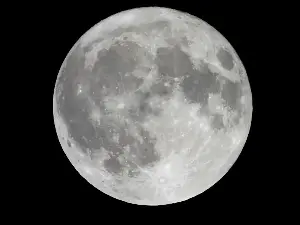
The Moon is so far from Earth that, using its average distance, you could line up every other planet in the solar system between us and still have about 4,400 kilometres left over.
A dying star might never collapse into a black hole — a tiny Big Bang could ignite at its core and leave a gravastar with no singularity and no event horizon
When Cancer Becomes A Parent: The Zodiac’s Natural Protectors And Heart Of Family Bonds
2026 Total Solar Eclipse Will Be Visible in Spain with a Catch
NASA names Artemis III astronauts: What crew will be paid for risky mission
Five uncrewed Starship rockets are projected to launch toward Mars during the brief window in late 2026 when the two planets align for the closest possible journey — and depending on whether they arrive intact, the first crewed missions could follow within five to seven years, in what would be the first time human beings have traveled to another planet in the roughly 200,000-year history of our species
Watch out for the giant scorpion hiding in the summer sky
How To Warm And Win A Cancer’s Heart: Secrets To Lasting Zodiac Love Revealed
A total solar eclipse is only possible because of a cosmic coincidence: the Moon is about 400 times smaller than the Sun but also about 400 times closer, making the two look almost the same size from Earth. But the Moon is slowly drifting away, so this alignment will not last forever. One day, hundreds of millions of years from now, the last total solar eclipse will pass across the planet, and no one will ever see the Moon fully cover the Sun again.