



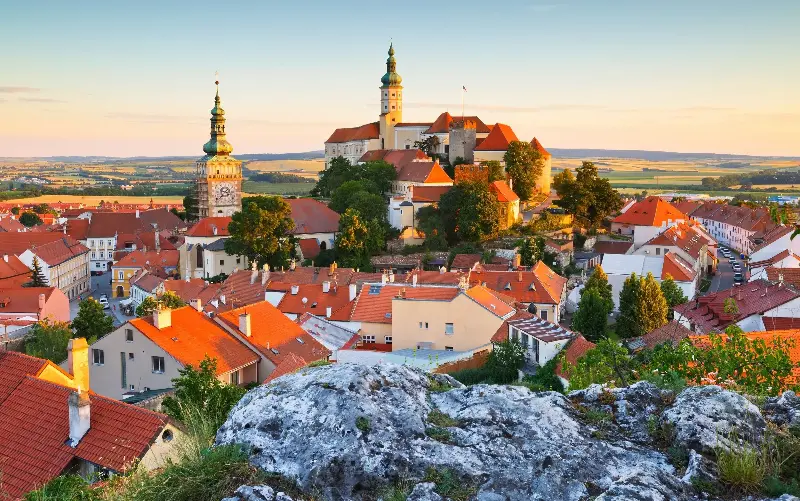
A report from Amadeus found that bookings to the Czech Republic – also known officially as Czechia since 2016 – were recently among the fastest-growing in Europe.
While most Brits will be acquainted with the fairy-tale charms of Prague, many have yet to explore beyond the capital: a crying shame, since the country offers several smaller but equally attractive towns (that are not overrun with tourists), including Olomouc and Brno; splendidly baroque destinations such as Cesky Krumlov and Karlovy Vary; and stunning landscapes throughout Moravia and Bohemia that are dotted with rolling hills, winding rivers and vineyards.
A potted history
Given Czechia’s position at the heart of Europe, it will surprise no one that the nation has repeatedly found itself caught up in the continent’s messy intersections of empire, religion and politics.
Christianity arrived in Great Moravia in the ninth century with the Byzantine missionaries Cyril and Methodius, helping lay the foundations of Slavic culture. Prague began to flourish in the 14th century under its most famous ruler, Charles IV, King of Bohemia and Holy Roman Emperor, who made the city the imperial capital and a centre of learning and culture; it was Charles who founded Charles University, laid out the New Town and began construction of St Vitus Cathedral and the Charles Bridge.
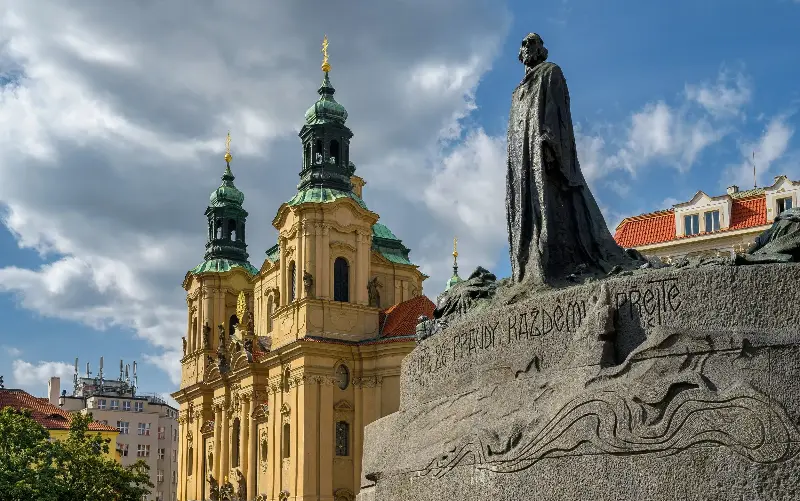
Religious tensions later made Bohemia a crucible of reform. Jan Hus, a critic of the Catholic Church who is memorialised in Prague’s Old Town Square (and elsewhere), was executed for heresy in 1415 and became a national martyr, helping to inspire the Hussite Wars. In 1620 the defeat of the Protestant Bohemian estates at the Battle of White Mountain brought the Czech lands under Habsburg rule: Catholicism was restored and Protestantism suppressed.
In the 18th and 19th centuries, a national revival restored the Czech language and sparked a renewal of national consciousness. Following the collapse of Austria-Hungary after the First World War, Czechoslovakia was established on October 28, 1918, bringing together the Czech lands of Bohemia, Moravia and Czech Silesia with Slovakia.
Tomas Masaryk became the first president, but independence didn’t last long. Nazi Germany occupied the country in 1939, and after liberation in 1945 a Communist coup in 1948 resulted in four decades of authoritarian rule. Following 1989’s Velvet Revolution, the dissident playwright Vaclav Havel claimed the presidency. In 1993, Czechoslovakia split peacefully – the so-called Velvet Divorce – into the Czech Republic and Slovakia. The Czech Republic joined Nato in 1999 and the European Union in 2004.
Needless to say, all this history has left its mark in the country’s medieval towns and cities, where regal castles and baroque churches sit alongside Habsburg architecture and Communist tower blocks.
Where to go
Cesky Krumlov
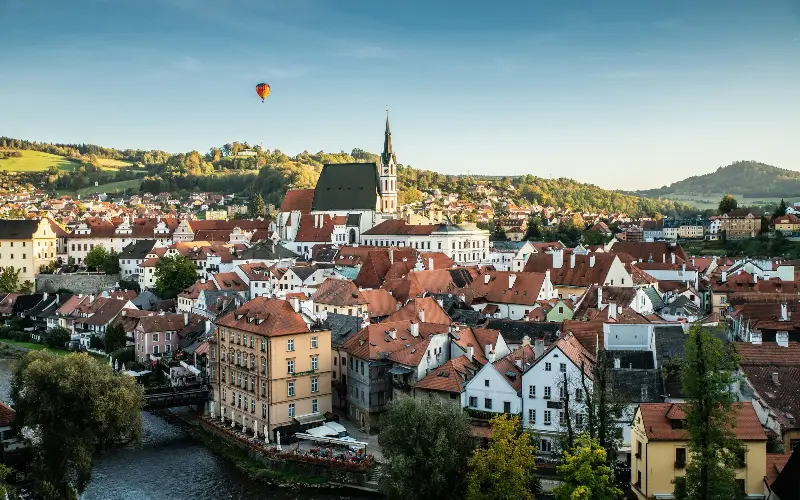
Perched prettily on a bend of the river Vltava, Cesky Krumlov is one of Europe’s most atmospheric small towns. Its historic centre, a Unesco World Heritage Site since 1992, is a wondrous maze of cobbled lanes, medieval (renaissance and baroque) houses and small squares, all dominated by one of the country’s largest castle complexes.
It’s a genuine pleasure to explore the alleyways, admire the scenery and linger at one of the riverside restaurants and cafés, though the castle’s scenic bridge, gardens and 18th-century baroque theatre shouldn’t be missed. Look out too for open-air theatre performances and the Egon Schiele Art Centrum (the Austrian artist’s mother was born here).
Karlovy Vary
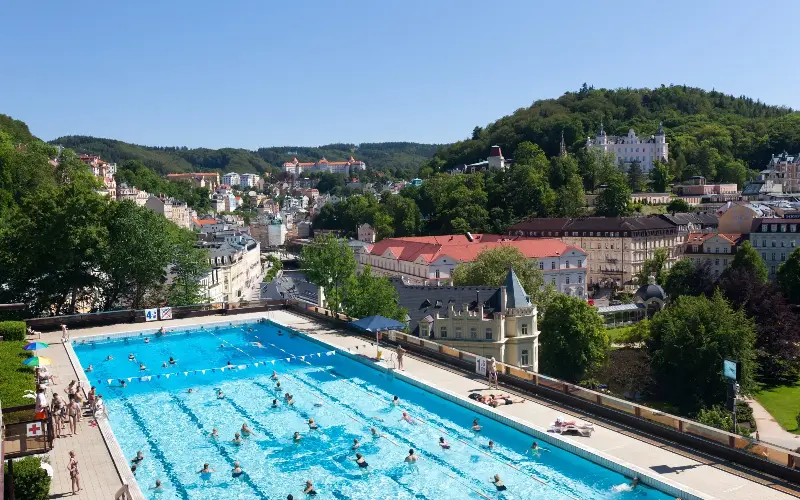
The grandest of Czechia’s spa towns, Karlovy Vary, in western Bohemia, was founded after hot mineral springs were discovered in the nearby wooded hills. Its elaborate colonnades, historic hotels and pastel-coloured villas hark back to the town’s heyday as a playground for European aristocrats and artistes (Goethe, Beethoven and Gogol among them), though some communist-era relics such as the brutalist Hotel Thermal also dot the townscape.
If you’re not down for a traditional spa ritual, you can sample the mineral waters from the town’s various springs as you stroll through it. The town also hosts the prestigious Karlovy Vary International Film Festival each summer.
Brno
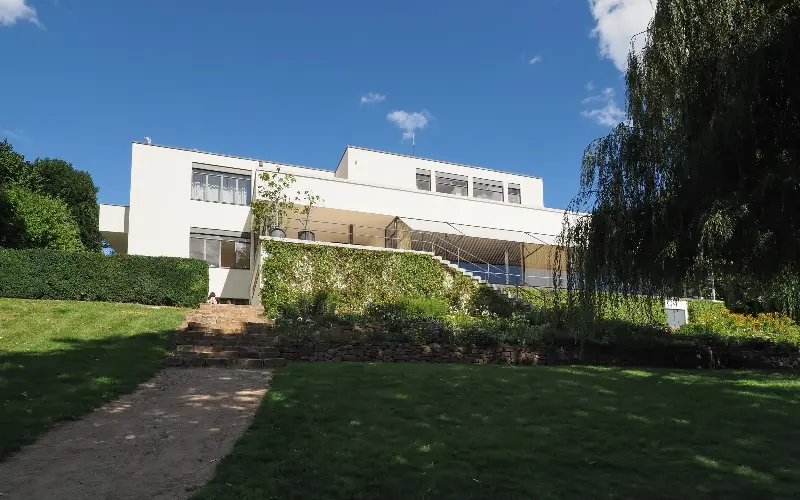
Czechia’s second city is an excellent antidote to Prague’s crowds. The official capital of Moravia, it’s a laid-back city with a youthful university population and strong culinary and culture scenes. Just north of the walkable historic centre is Villa Tugendhat – Ludwig Mies van der Rohe’s pioneering modernist house, a Unesco World Heritage Site. The centre itself contains the splendid Gothic Cathedral of St Peter and Paul and the hilltop Spilberk Castle. Below the ground are hidden market cellars and an ossuary (beneath St James’ Church), and Brno makes a great base for exploring South Moravia’s vineyards (see below) and the Moravian Karst.
Olomouc
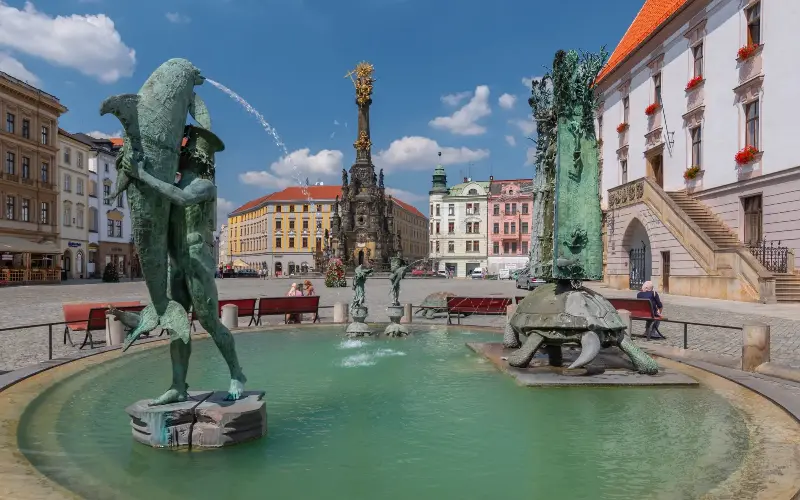
Smaller and more compact than nearby Brno, Olomouc is still worth a visit for its string of baroque fountains, churches and handsome townhouses, all arranged around the Unesco-listed Holy Trinity Column – a quite extraordinary 18th-century monument covered in religious sculptures. There are dashes of social realism in the town hall’s astronomical clock (remodelled in the 1950s) plus a fortress, a cathedral and ornate churches to explore. Like Brno, the town has a buzzy café and restaurant scene too; do try some Olomoucke tvaruzky, a pungent soft cheese that hails from the surrounding area.
South Moravia
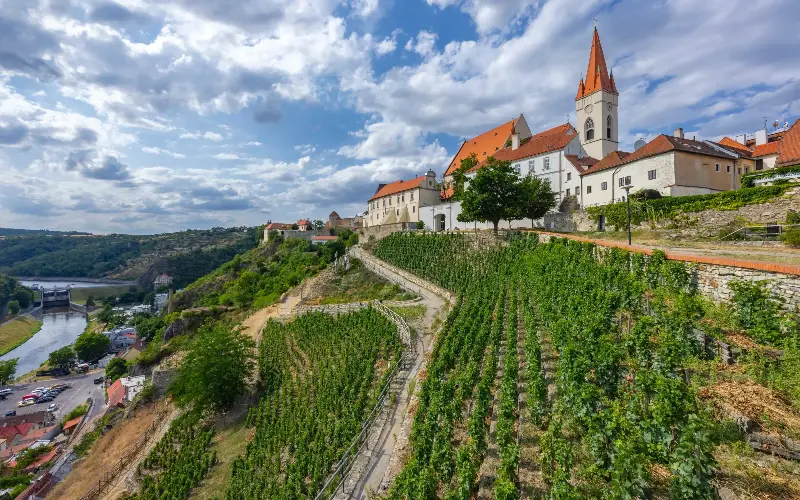
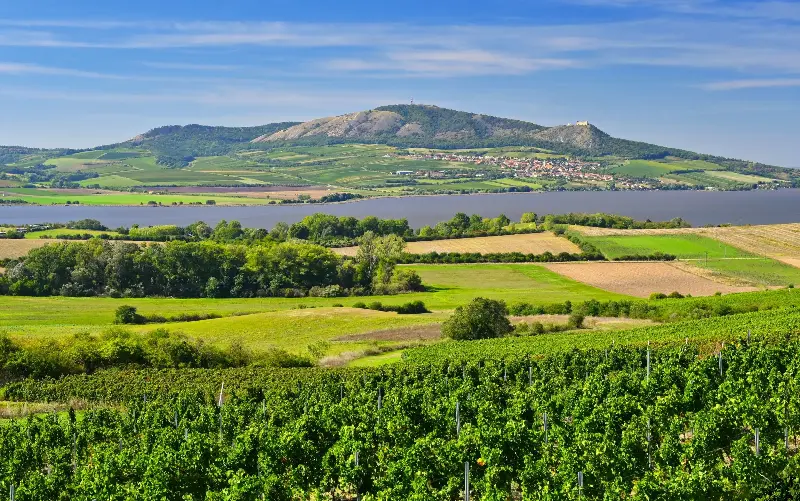
Although Bohemia contains wonderful vineyards, Moravia accounts for around 95 per cent of the country’s production. Spread across four main sub-regions – Znojmo, Mikulov, Velke Pavlovice and Slovacko – it’s also one of the most scenic areas in the country.
Don’t miss the baroque castle and museum in Mikulov, the Podyji National Park near Znojmo or the Unesco-listed Lednice-Valtice complex, a combination of two aristocratic residences complete with lakes, forests, avenues and landscaped gardens. It also includes Valtice’s National Wine Salon, a wonderful place to sample the region’s excellent array of rieslings and grüner veltliners, sauvignon blancs and palava.
Need to know
Currency
Czechia uses the Czech koruna (Kc/CZK), not the euro. Cards and contactless payments are widely accepted, but it’s useful to carry some cash, particularly in smaller towns.
Getting around
Czechia is exceptionally easy to explore by train, with frequent services linking Prague, Brno, Olomouc and other major towns. Regional buses are pretty good too, though a car is probably more practical if you’re planning to make the most of rural areas such as South Moravia.
Language
Czech is the official language, but English is widely spoken in hotels, restaurants and tourist attractions, particularly in larger towns. Learning just a few words such as dobry den (hello), prosim (please) and dekuji (thank you) usually goes down well.
Eating
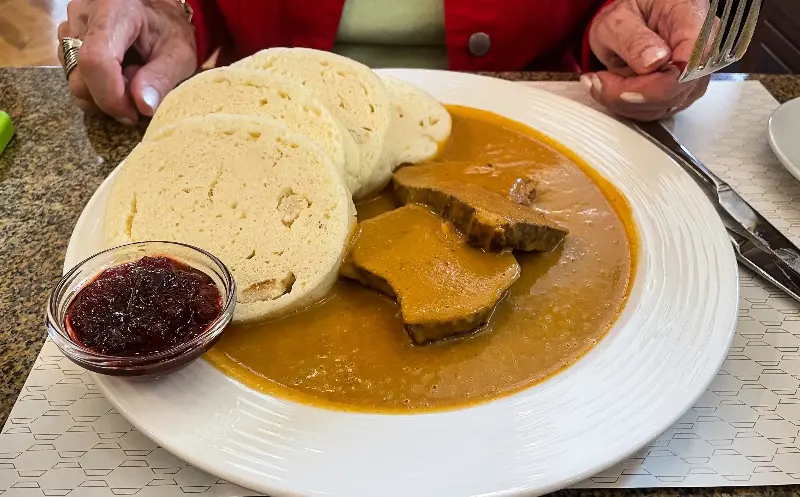
Czech classics include svickova (beef in a creamy vegetable sauce), roast duck with cabbage and dumplings and fried cheese. Czech beer is of course an essential part of the culinary culture, especially in towns such as Pilsen and Ceske Budejovice, while South Moravia and Bohemia are the places to explore top-notch Czech wines.
Etiquette
Tipping is customary rather than obligatory; around 10 per cent is a reasonable guide for good restaurant service. A simple dobry den when entering a small shop or restaurant is considered good manners. Make direct eye contact and say “Na zdravi!” (Cheers!) when clinking glasses of beer or wine.
Good to know
Czechia is in the EU and Schengen Area, uses 230V European-style sockets and drives on the right.