



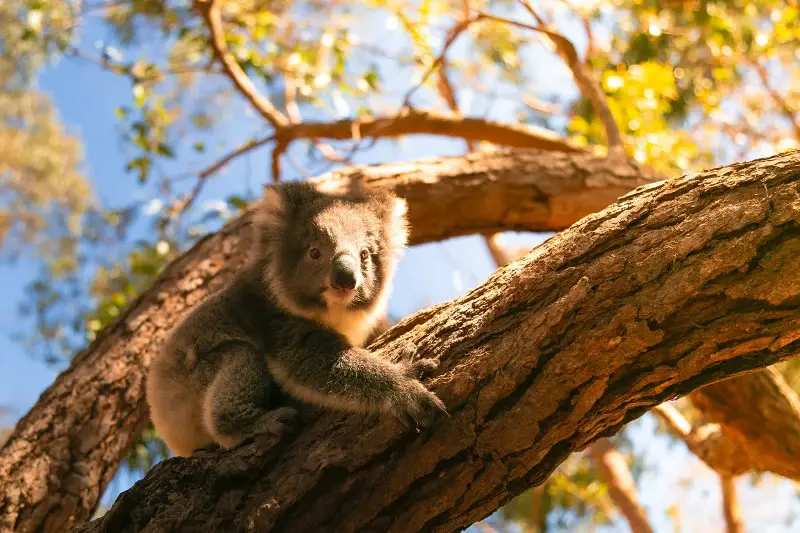
Koalas are world-famous for their tranquil lifestyle, often seen resting high in eucalyptus trees, waking briefly to nibble a few leaves before curling back up to sleep. Yet this calm routine is far from laziness. It is actually one of the most brilliant energy-saving strategies in the animal kingdom.
A koala's lifestyle is shaped by an exceptionally challenging diet. Eucalyptus leaves are abundant across Australia, but they are exceptionally low in calories, relatively poor in protein, dense with tough fiber, and packed with complex plant compounds. For a mammal dependent almost entirely on this foliage, survival means treating energy as a strictly guarded resource.
A High-Cost Botanical Diet
Eucalyptus leaves may look like an easy food source, but they represent a complex nutritional puzzle. Trees protect themselves with tough plant fibers and potent oils, making their leaves difficult to break down and digest.
Koalas have evolved clever ways to navigate this difficult menu:
- Selective Feeding: Rather than eating indiscriminately, koalas carefully choose specific eucalyptus species and individual leaves that offer higher moisture, superior nutrients, and lower natural toxins.
- Controlled Portions: An adult koala typically consumes between 200 to 500 grams of leaves daily.
- Disciplined Energy Budgets: Because the net energy gained from leaves is modest, a koala cannot afford the high-energy lifestyle of monkeys or wallabies. Every movement must be calculated.

The Secret Behind Endless Sleep
Koalas frequently rest or sleep for 18 to 22 hours every day. While not all of this time is spent in deep sleep, these prolonged periods of stillness are vital to their survival. Reducing movement lowers the energy required for muscle activity, metabolic processes, and temperature regulation.
To maximize efficiency, koalas rely on several unique adaptations:
- Nocturnal Activity: Moving through branches or walking on the ground is energetically expensive. Koalas do most of their feeding during cooler evening, night, and early morning hours.
- Slow Metabolism: Studies reveal that koalas possess one of the lowest metabolic rates among mammals of similar body size, allowing their bodies to burn fuel very slowly.
- Behavioral Cooling: To prevent energy loss from overheating in hot weather, koalas stretch across cool tree trunks or move lower down into shady branches.

A Natural Fermentation Factory
The real effort begins after a koala swallows a leaf. To extract nourishment from tough plant material, koalas rely on a specialized digestive organ called the caecum, an internal pouch that can measure up to two meters long.
Inside the caecum, beneficial gut microbes ferment the tough plant fibers, breaking them down into compounds the koala can easily absorb. Simultaneously, the koala's specialized liver continuously neutralizes eucalyptus oils. Detoxifying these compounds requires continuous energy, reinforcing why a slow, restful lifestyle is so vital. Even young joeys receive a unique, microbe-rich substance called pap from their mothers to establish the healthy digestive bacteria needed for adulthood.
Water, Weather, and Natural Balance
While koalas obtain most of their hydration directly from moisture-rich eucalyptus leaves, they will readily drink water from streams, raindrops on bark, or fresh puddles during dry spells and hot weather.
A koala’s daily routine is far more complex than a simple cycle of resting and eating. Every long nap, carefully picked leaf, and slow digestive phase is part of a finely balanced survival system. Koalas prove that in nature, extraordinary success does not always belong to the fastest or most active creature—it belongs to the master of patience and conservation.